

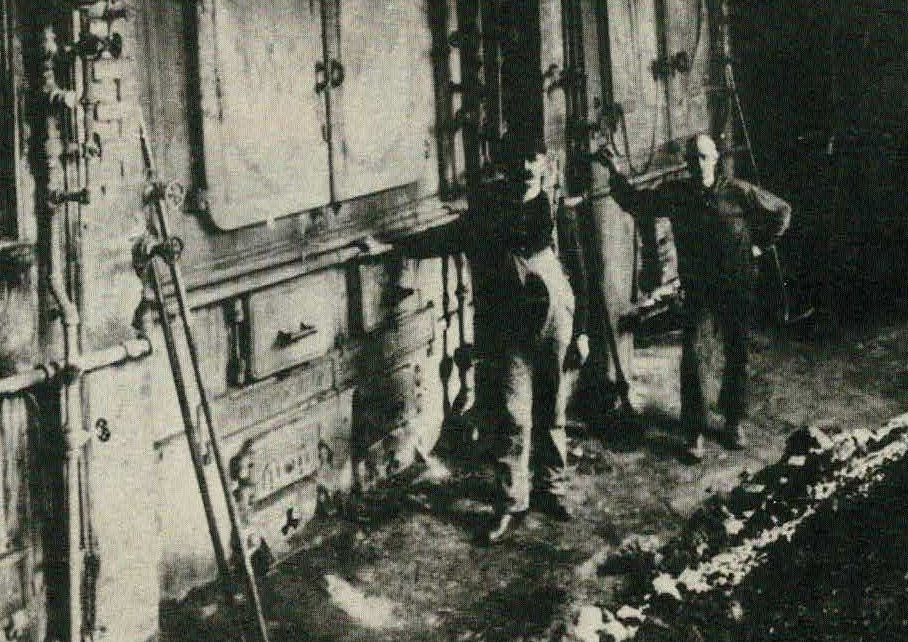
Below is an article from the Bridgeport Sunday Post, dated February 15, 1953. In the article, my father is quoted describing how local businesses delt with the shortage of Boiler Operators at the time. Remember that most boilers were still “hand-fired” in the 50’s, and boilerman needed to make constant air-fuel ratio adjustments to match the changing steam loads
TODAY’S BOILERMAN NEED BRAINS RATHER THAN BRAWN BY BOB STOCK
2/15/1953
There’s a cloud of more than steam hanging above the huge boilers that provide the power for many of the city’s industries and institutions.
In the basement of hospitals and factories and schools, beside the roaring monsters that make the wheels go round, men are worrying about the future. They just don’t know where the boilerman of tomorrow are going to come from.
The disease that is eating at the industrial heartland is compounded from ignorance and old age. Modern youth want nothing to do with a job associated in its mind with sweat and dirt and heat. The old timers are retiring. Qualified replacements are nowhere to be found.
It is the misconception that the boiler room is a species of industrial “hell-hole” which the Bridgeport Power Engineers association is fighting, in its effort to enlist youths in recently instituted courses for boiler-operators and operating engineers.
TRUE NO LONGER
“It was true in the old days that boiler men were long on muscle and short on brain.” Says William T. Guy, association member in charge of the training program and head maintenance man at St. Vincent’s hospital. “But today the opposite is the case.”
By way of proof, Guy points to the boiler room of his hospital, a fantastic maze of valves and meters, “Only an expert can operate these.” He insists. “It requires education and a lot of it. The work is clean and tough – and remunerative. There’s no shoveling of coal, but there’s responsibility.” The association in cooperation with the Bureau of Apprenticeship, U.S. Department of Labor, has organized two- and four-year courses at the Bullard-Havens Technical school with on-the=job training, to fill the fast-emptying boiler ranks.
BENEFITS OF TRAINING
What boiler operators given this education can accomplish:
1. The hue and cry for smoke control in the city are largely a result of inefficient boiler room operations. Skilled operators and engineers would bring the Bridgeport smog down to a minimum.
2. Savings in terms of dollars are considerable with men who know what to do and why. Power engineers here always point to Guy, himself, in this connection: he saved the hospital thousands of dollars by revamping the power set-up.
3. Boilers ineptly managed are a tremendous safety hazard. Graduates of the association courses will be equipped not to make dangerous mistakes.
What is needed now, says Guy, are students for the new course. As he points out: “Those boilers won’t run by themselves.”


Comments